Author: margaritamlopez

  • Morning sting, Spring Newsletter 2019

    Morning sting, Spring Newsletter 2019

    López-Uribe Lab at Penn State University

    Spring has arrived and there is much to be excited about. Check out our research and local events from the Center for Pollinator Research and Penn State Extension. Our research and extension programs aim to integrate basic research with citizen science to understand how agricultural practices impact pollinator populations. Using these methods, we are helping inform sustainable practices and crop management strategies to both preserve bee biodiversity and increase farmers’ profits on a local scale.

    Bee Facts

    What’s blooming in Pennsylvania during the Spring?

    Maple (Acer spp.)

    Blueberries (Vaccinium spp.)

    Sage (Salvia spp.)

    Violets (Viola spp.)

    Southern magnolia (Magnolia grandiflora)

    Black Locust (Robinia pseudoacacia)

    Eastern Redbud (Cercis canadensis)

    Cornelian-cherry Dogwood (Cornus mas)

    American Plum (Prunus americana)

    Black Willow (Salix nigra)

    Japanese Quince (Chaenomeles japonica)

    Identify the trees in your backyard with the Common Trees of Pennsylvania guide

    For a list of pollinator friendly flowers for the northeast go to: https://xerces.org/pollinator-conservation/plant-lists/


    Research & Extension

    Checklist of Bees of PA

    As of January 2019, 83 new species records have been recorded for Pennsylvania. These results bring up the total number of species for the state to at least 450, read more.

    Feral Bee Health of PA

    Since 2016 we have been leading a citizen science project to map the location of feral colonies and characterize the health status of these unmanaged bees across Pennsylvania. Our results suggest that feral colonies have stronger immune systems than their managed counterparts. We are continuing our feral bee survey and asking interested citizen scientists to collect samples of feral colonies, read more.

    Installation video

    Spring is a busy time of year for beekeepers; it marks the arrival of packages. Packages arrive as early as April in Pennsylvania. Here is a video that will walk beekeepers through a step-by-step protocol of how to install package bees, read more.

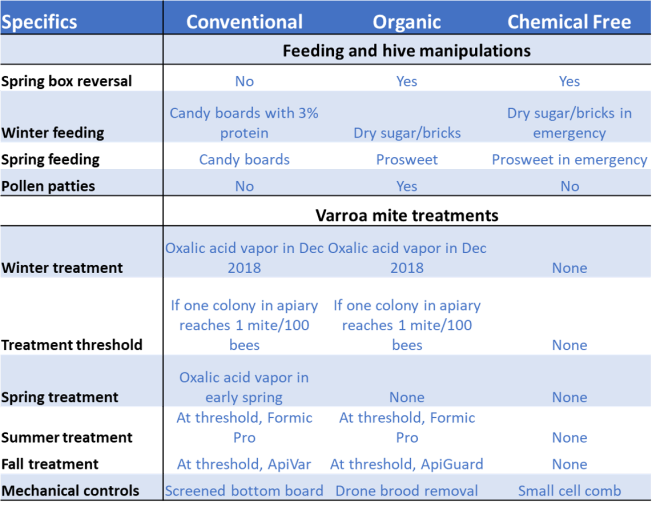
    COMB, Conventional and Organic Management of Bees

    Project COMB aims to determine the impacts of management practices on honey bee colony health. Specifically, we will compare conventional, organic, and chemical free management beekeeping systems, read more.

    Spotlight

    Congratulations to Shelby Kilpatrick. She won second place in the Educational Digest (ED) Talk Competition at the 2019 Eastern Branch Meeting of the Entomological Society of America for her talk on “Collections, Checklists, & Changes: My studies in bees”. She is also a 2019 recipient of the Apes Valentes Research Award for her project: “Form and Function: examining coevolution between specialist pollinators and their host plants through comparison of bee pollen-collection/transport and pollen grain structures”.


    Congratulations to Brooke Lawrence who was awarded the “Extension Graduate Student Fellowship” and is a 2019 recipient of the Apes Valentes Research Award for her project: “Maintaining the colony pantry: Impact of pesticides on pollen preservation in honey bee colonies”. She is going to be leading research efforts to investigate how in-hive chemicals impact honey bee health while working with teachers, beekeepers, and researchers to develop curriculum to teach 4-H students about biological processes using honey bees as a model system.


    Bombus ternarius, the orange-belted bumblebee or tricoloured bumblebee, is common throughout the NE US and parts of Canada.

    Publications & Events

    Penn State to bring pollinator garden that will last ‘forever’ to the Arboretum The Center for Pollinator Research has been working with the Arboretum to renovate to the Arboretum pollinator garden, which is to be ready for students in the fall of 2020, read more.

    Certified Bee Campus

    Penn State became the 55th educational institute in the nation to become a certified Bee Campus as an affiliate of the Bee Campus USA program. The University Park campus joins more than 100 other cities and campuses across the country united in improving their landscapes for pollinators, read more.

    What’s the buzz? Pennsylvania plans to help save the bees

    The Pennsylvania Pollinator Protection Plan (P4) was released in September. It dives into threats facing the state’s pollinating species and describes methods shown to protect the insects that support both the state’s natural biodiversity and its $260 million fruit and vegetable growing industry, read more. 

    What Can Bees Teach Us About Building Better Urban Ecosystems?

    Bees love cities, but what can cities offer bees? Vacant land and urban agriculture are rejuvenating wild bee populations, read more. 

    Introducing Beescape: A new online tool that supports bees

    A new online tool and community, called Beescape, enables beekeepers, or anyone interested in bees, to understand the specific stressors to which the bees in their managed hives, home gardens or farms are exposed, according to researchers at Penn State, read more.

    Bee dispersal ability may influence conservation measures

    The abilities of various bee species to disperse influences their population genetic structure, which, in turn, can constrain how they respond to environmental change, as reported by an international team of researchers, read more.

    Protecting Bees

    Want to start a pollinator garden or create a customized plant list? Try the new search engine, Find Plants, for finding plant most suitable for your location, ranked according to their attractiveness for different groups of pollinators, read more.

    Checking out Pollinators in Pennsylvania

    With insect species declining and agriculturally-important pollinators at risk, it’s important to know what species are present in an area to help protect them. Ph.D. student Shelby Kilpatrick is trying to find out what bees are present in Pennsylvania and is creating a list that could help with future conservation efforts, read more.


    IPM News and Events

    Native Mycorrhizal Fungi and Whitebark Pine Restoration
    Tuesday, May 14, 2019, 12 pm (MDT) by Dr. Cathy Cripps, Professor & Mycologist, Montana State University. Whitebark pine (Pinus albicaulis) is an iconic, five-needle, high-elevation pine whose existence is threatened by an exotic rust, mountain pine beetles, fire suppression, and climate change. Its distribution is limited to western North America and populations have declined 90% in recent decades.

    New Entry Sustainable Farming 20 week Crop Production Course

    This is a great course for anyone looking to develop skills and knowledge growing vegetable crops organically and using soil health and conservation principles. We tailor the course to be informative and useful for anyone interested in producing food, particularly for those with goals of growing commercially who need “hands-in-the-dirt” skills training.  The course meets in person 10 times on Sunday afternoons, with supplemental instruction in online course modules to learn at your own pace and to supplement on-farm instruction. You can also gain additional experience helping out on the incubator farm and supporting production in the class demonstration plot. $600 starts May 5.


    Peer-reviewed

    López-Uribe MM, Jha S, Soro A. (Accepted) A trait-based approach to predict population genetic structure in bees. Molecular Ecology.

    Underwood RM, Traver BE, López-Uribe MM. (2019) Beekeeping management practices are associated with operation size and beekeepers’ philosophy towards in-hive chemicals. Insects 2019, 10, 10. doi.org/10.3390/insects10010010 [link]

    López-Uribe MM, Simone-Finstrom (2019) Special Issue: Honey bee research in the US: Current state and solutions to beekeeping problems. Insects 10, 22. doi.org/10.3390/insects10010022 [link].


    Grants, 2019

    Breeding tolerance for DWV in Honey Bees from North American Pollinator Protection Campaign

    Conserving and Enhancing Pollinator Populations and Ensuring Pollination: Professional Development for Extension Educators in Northeastern United States; from Penn State College of Ag – Multistate Research and Extension Program

    Partnering with beekeepers to breed for tolerance to DWV in honey bees; from Penn State College of Ag – Multistate Research and Extension Program

    Posts


    López-Uribe Lab
    Penn State University
    Twitter @lopezuribelab
    Facebook Lopez-Uribe Lab
  • Windbreaks and wind breaks

    Windbreaks and wind breaks

    Photo by Larry Mutti

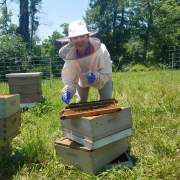
    Wind is common in winter in the northeast. This winter, there was a particularly distressing wind event that blasted the northeast Sunday into Monday 24-25 February 2019.  Strong eastward winds whipped through the area causing downed trees, destroyed fences, partial building collapses, and lost power to many residents and businesses. With wind gusts often breaking 50 mph, windbreaks built by beekeepers to protect hives over the winter were ineffective.  A visit to the various sites of the COMB project revealed many thrown lids, despite the placement of heavy rocks on each. In one apiary in central PA, almost half the hives were blown over. Two of the 5 colonies in toppled hives succumbed to the cold, while the other three were alive (and very angry!) as they were set upright. As the wind subsided, the only thing to do was pick up the pieces, put things back together again, and hope for the best.

    This event removed two otherwise thriving colonies from the COMB project. We are sad for the loss, but we are determined to learn from it.  What lesson can we share from this experience? Placement of hives is of utmost importance in all seasons. Considerations for the best locations in cold weather are distance from the beekeeper’s residence, road conditions, and wind breaks.

    1. Consider the distance between you and your hives.  In our case, the distance of some of the COMB sites is a two-hour drive, and in this situation, it was difficult to get to them all in a timely manner. Perhaps all of the toppled colonies could have been saved if they were discovered and set upright more quickly. If your hives are far from home, enlist the help of someone who lives close, so you can be alerted when there is a problem.
    2. Consider road conditions carefully. A few of the COMB apiaries are best reached using a 4 wheel drive vehicle. This is not ideal and makes access difficult at times.
    3. While each apiary was assessed for the possible effects of wind, it is clear that a few of them were too exposed.  Hay bales were put in place to block the majority of the wind but it was not enough the protect the hives from strong gusts.  If this might be a problem in your apiary, consider tightly strapping the hive bodies together. If you do so, a hive can topple, but remain intact. This will protect the bees until the equipment can be put upright. In our case, it likely would have made a big difference.

    Beekeepers are constantly being taught lessons by the bees and nature.  If we pay attention and learn from our mistakes, we will become better beekeepers and have happier healthier bees.

    Photo by Larry Mutti

    Written by Robyn Underwood

    Assistant Research Professor

    Penn State University

  • Purdue ankle biting honey bees: What’s the buzz?

    Purdue ankle biting honey bees: What’s the buzz?

    The beekeeping industry is facing serious challenges to maintain the necessary number of colonies to supply the demands for crop pollination. One of the major problems that honey bees have comes from the ectoparasitic mite, Varroa destructor, which transmit lethal honey bee viruses. Currently, most managed honey bee colonies cannot survive the winter without varroa treatment, and even with intensive management regimes, beekeepers are losing on average 50% of their colonies in Pennsylvania.

    Photo 1. Varroa mites that have been damaged by ankle biting bees, photos by Mark Gingrich.

    The Pennsylvania Queen Improvement Project is a beekeeper-led initiative that started in 2010 with the goal of improving hardy Pennsylvania survivor honey bee stocks. The project was conceived by the‑back then‑president of the Pennsylvania State Beekeeping Association (PSBA) Warren Miller, Maryann Frazier, Jeremy Barnes, Mark Gingrich, and Jeff Berta. But things really took off when Jeff received a USDA farmers grant in 2011 and initiated this project that has been building since then. Currently, other beekeepers actively participate of this breeding queen improvement project including Charlie Vorisek in Linesville, Mark Gingich and Steve Finke in Kutztown, Bernie Svidergol in Ebensburg, and Steve Repasky in Pittsburgh. Last year, our group organized 5 field days where attendees learned the basics of queen rearing and also received queens with improved latest genetics. These field days reached over 320 participants this past year.

    In 2015, we joined forces with Dr. Hunt at Purdue University, and the Heartland Honey Bee Breeders Coop (HHBBC), because he discovered that some honey bees chew the legs off of varroa mites and then cause them to drop off the colony and die (photo 1). We wanted to add this mite-biting behavior trait to the Pennsylvania survivor stock that we were working on. Since 2017, a group of 6

    beekeepers has been working with the HHBBC to compare how the mite-biting Purdue bees compare to feral bees from Pennsylvania and packaged bees from the south. Each beekeeper has been independently comparing the following traits in the Purdue, feral and control (package) honey bees: mite count, mite chewing percentage, hive weight, and winter survival.

    The results from 2017 show strong differences among the Purdue, feral and control (package) colonies. The key results are that the Purdue bees showed significantly more chewed mites than the feral or control bees (Fig. 1). In addition, the Purdue colonies also showed the highest weights among all the colonies tested. The average weights were Purdue (132 pounds), control (97 pounds) and feral (85 pounds). Winter survival was measured in March of 2018 and the results indicate that the Purdue and feral bees showed significantly higher survival than the control packaged bees (Fig. 2). Specifically, 21 out of 30 Purdue bees survived (70%), for feral colonies 10 out of 16 survived (62.5%), and for the control 6 out of 18 survived (33.3% ).

    Figure 1. The proportion of mites that were damaged in colonies from different sources: package (control), feral, and Purdue bees.
    Figure 2. Winter Survival. Purdue and feral bees showed significantly higher survival than the control packaged bees.

    Our data indicate that on average the Purdue and feral bees have better overwintering success than packaged bees. These results are very promising and suggest that the queen improvement efforts of our project are generating effective outcomes.

    The research advisor of the project is Dr. Margarita López-Uribe from Penn State University. Dr. Brock Harpur, recently hired at Purdue University, will also be working on this project this coming year. Stay tuned for the result of our ongoing efforts in 2018 and 2019 with this work. If you have you would like to participate of our program, please join us; we are stronger together!

    Post contributed by Jeff Berta

    Co-Chair PA Queen Bee Improvement Project, LLC

    CFO-Always Summer Herbs, LLC

  • COMB

    COMB

    2018 COMB Stakeholder Meeting

    On November 30th 2018, 33 beekeepers and researchers met at the Wyndham Garden Hotel in Boalsburg, PA to discuss results of the first year of the COMB project, and next steps for beekeeping management decisions for year two of the project.  The day was filled with updates about how the project went in its first bee season.

    In summary, the packages were installed in late April 2018 in all four regions of the study (figure 1), and became well established. We gave plastic foundation to each colony, so bees had to build their comb from scratch. On average, 3 full boxes of comb were drawn in time for storage of winter feed.  Varroa mite numbers were low throughout the season, but increased in the fall, as expected. Untreated colonies had more mites, at about 3.5 mite per 100 bees in early October (compared to <1 in treated colonies). As expected, preliminary results show that Nosema ceranae levels were higher in the spring than in the summer in all management systems.

    Figure 1. Map of apiaries in COMB

    While in 2018 our primary goal was to successfully establish all colonies, 2019 will be a critical year for data collection to answer the main research questions of the project. Our main goals with this project are to both (1) monitor the health of colonies under the different management practices, and (2) assess the economic impacts of each system in terms of inputs (costs) and honey production (revenue). During the second part of our stakeholder meeting, each group discussed protocols for their management system that would allow us to manage colonies using the practices used by beekeepers in the different groups while maximizing economic gains. Some of the topics that were discussed include how to handle winter and spring feeding, splitting and swarm control, and varroa mite control. 


    Two new research projects have emerged as part of the COMB project. The first is a study of the microbiome of bees and bee bread before and after treatment of colonies with ApiVar and Formic Pro. This project is led by PSU graduate student Brooke Lawrence. Specifically, she is interested in characterizing how in-hive chemicals change the microbiome of the colony and how that may impact honey bee health. The second project is an investigation of differences in sperm viability in queens from weak and strong colonies, conducted by Ali McAfee of the University of British Columbia. Preliminary results indicate that the two groups have different ovary weights, but it is not clear whether that is a result of or cause of the differences in the worker bee populations.

    The meeting was a full day of learning and discussion that brought together beekeepers from across the spectrum of beekeeping management systems.  We are all eager to see what the 2019 bee season brings!


    Written by Robyn Underwood

    Research Assistant Professor

    Penn State University

  • Tracking the Health of Feral Bees in PA, 2018

    Tracking the Health of Feral Bees in PA, 2018

    Since 2016 the López-Uribe lab has been leading a citizen science project that aims to map and characterize the health status of feral bees across Pennsylvania (check out our website: Tracking the Health of Feral Bees in PA). We had reports of 17 known feral locations by the end of 2017. Since then the project has grown substantially. In early 2018, a total of 56 feral locations were reported. The colony locations range throughout the state, from Pittsburgh to Harrison Valley and Philly to Scranton (figure 1).

    Figure 1. Distribution of feral bee in Pennsylvania. Green dots refer to feral colonies reported in 2017, purple refers to colonies reported in 2018, black refers to colonies that died this past winter.
    Photo 1. Chauncy Hinshaw collecting samples from a feral colony in a tree near Saxonburg, PA

    This year, we conducted the first overwintering survey of feral colonies in Pennsylvania and found a feral wintering loss of 42%. These losses are close to the winter losses reported for managed colonies in Pennsylvania by the Pennsylvania State Beekeepers Association (PSBA), which was 44.5% for the 2017-2018 winter. However, Pennsylvania’s wintering loss was higher than the average reported for managed colonies in the US (via Bee Informed Partnership) and Canada (via Canadian Association of Professional Apiculturists), both of which averaged 32% this past year. In the states, beekeepers reported the primary reason for colony loss was ineffective control and mismanagement for the varroa mite, while beekeepers throughout Canada attributed colony loss primarily to weather and poor quality queens. Varroa pressures ranked among the top three causes of wintering losses according to the Pennsylvania beekeepers (PSBA). There is a general consensus that multiple factors are impacting bee health including poor nutrition, pesticides, pathogens and parasites. These stress factors all interact with each other, reducing bees fitness and survival. With added stress, bees more easily succumb to disease pressure and do not make it through winter.

    Katy Ciola Evans collecting samples from the side of a house in Lake Erie, PA.

    This spring, the feral team started collecting samples later than anticipated due to unusually cool temperatures that persisted into May, as well as unpredictable rain. In 2018, we began collecting spring samples in May (photo 1 & photo 2) and will resume the fall sampling collections between September and October. We will share with you an update about the pathogen and immune gene expression levels of these colonies the 2018 Annual PSBA conference this November in State College!

    Summer 2018

    In addition to quantifying pathogens and immune genes, this year we also compared behavioral traits between feral and managed colonies. In collaboration with Romina Russo, a visiting scientist from the National Institute of Agricultural Technology (INTA) in Argentina, we assessed the hygienic behavior of feral versus managed colonies using a pin-kill assay. Honey bees are considered more hygienic when they are better able to detect, uncap, and remove infected pupae, slowing the spread of disease and the population growth of varroa. For each colony, we selected a frame with greater than 25% capped brood on both sides. On each side of the frame, about 100 capped pupae (photo 3a) were punctured with a small pin, about the size of a sewing needle or entomological pin, and the frame was placed back in the colony (Image 3b). After a period of 24 hours, we returned to the colony to record how many of the pin-killed pupae had been removed (Image 3c). The pin-kill assay measures hygienic behavior based upon the number of pupae that the bees removed from their cell after a period of 24 hours.
    We tested a total of 5 feral and 4 managed colonies with the pin-kill assay. The top 4 “hygienic” colonies were feral, meaning that the feral colonies on average removed more of the dead pupae after 24 hours compared to the managed bees. In addition to performing hygienic assays, we recorded phoretic mite counts via detergent washes (similar to alcohol washes but detergent was used). Overall, the colonies had relatively few mites, less than 4 mites/100 bees). We are hoping to expand this aspect of the project next year.Photo 4. A feral colony in an abandoned shed outside of Harrison Valley, PA.

    Future

    For the third year of this project, we will continue mapping the distribution of feral bee colonies and their overwintering success throughout Pennsylvania (photo 4). We would like to collect long-term data on the survival and distribution of feral colonies, so we hope we will continue to have your support next spring. If you do locate a feral colony and do not wish us to collect a sample or if the feral colony is in a remote location, simply recording the location and survival of the colony would be of great importance and interest to our research (photo 5).

    Photo 5. A feral colony in a tree near Linesville, PA.

    We are very grateful to the 39 participants that have reported locations of feral colonies and to the individuals who donated feral cut-outs and swarms. We rely on the active participation of beekeepers and the public to report locations of feral bees throughout PA. When we study feral bee colonies, they remain unharmed during collection and all information that you share with us remains confidential. Many times the cavities of colonies that died over winter become re-colonized, so if you know of a feral colony that died over winter please double check the cavity this fall. If you are aware of an unmanaged or feral honey bee colony, please share with us information regarding its location via our Tracking Feral Bee Health FORM or via email at the López-Uribe Lab (lopezuribelab@gmail.com).

    We would like to thank everyone for their support and participation!

    Feral Bee Tea

    Post was written by Katy C. Evans

    Pictures by Katy C. Evans

    This work is supported by the USDA National Institute of Food and Animal Health Appropriations under Project #PEN04620 and Accession #1011873.


    References

    1. Bee Informed Team (2018). Honey Bee Colony Losses 2017-2018: Preliminary Results [https://beeinformed.org/results/honey-bee-colony-losses-2017-2018-preliminary-results/].
    2. Canadian Association of Professional Apiculturists (2018). Statement on Honey Bee Wintering Losses in Canada (2018), August [http://www.capabees.com/capa-statement-on-honey-bees/].
    3. Evans K, López-Uribe MM. (2018). Tracking Feral Bee Health in Pennsylvania, preliminary results 2017. Pennsylvania State Beekeepers Association Newsletter, March [https://lopezuribelab.com/wp-content/uploads/2019/09/1717a-newsletter-march-2018.pdf].
    4. López-Uribe MM. (2017). Tracking the health of feral honey bees in Pennsylvania. Penn State Extension Fruit Times, October [https://extension.psu.edu/tracking-the-health-of-feral-honey-bees-in-pennsylvania].
    5. United States Department of Agriculture, Animal and Plant Health Inspection Service (2018). USDA Honey Bee Pests and Diseases Survey Project Plan for 2018 [https://www.aphis.usda.gov/aphis/ourfocus/planthealth/plant-pest-and-disease-programs/pests-and-diseases/non-regulated/honey-bees/ct_survey].