Author: margaritamlopez

  • The Master Gardener Bee Monitoring Project

    The Master Gardener Bee Monitoring Project

    This post is contributed by Tony Shaw, a Master Gardener who is a member of the Pennsylvania Bee Monitoring Project.


    Early in Summer 2021, the Master Gardener Leadership Team invited Master Gardeners across the Commonwealth to participate in a new partnership with PSU professor Dr. Margarita López-Uribe. Her lab spearheads pollinator and bee research at Penn State University. 


    Quoting the MG Leadership Team’s invitation, partnering with the Master Gardener program “ . . . provides a unique opportunity to advance our knowledge of the status of wild bee populations in Pennsylvania . . . The proposed project capitalizes the interest of Master Gardeners in pollinators . . . while providing an educational opportunity for them [Master Gardeners].”


    I was fortunate to be selected as one of the first ten Master Gardeners scattered across the Commonwealth to participate in this pilot project. We began this Summer viewing several video presentations followed by a training workshop day at Shaver’s Creek Environmental Center near State College.


    We were trained there in bee trapping, collection methods and how to process the resulting bee specimens. We concluded with labeling and pinning the bees per entomological archiving standards. We will send the pinned collections to PSU’s bee taxonomists this Fall for identification, whereupon they will be stored in the Frost Museum.


    I am finding my participation to be an extremely enjoyable and rewarding experience. To date, I have completed five survey collection efforts; one of which was at our PSU Extension Office pollinator garden late this September.


    The accompanying photos shows two of the methods we used – the “blue-vane jar” and “cup” traps. The arrows on the blue vane photo point to two of the nine cups we place on the ground. Each method uses a mild dish soap solution to capture the bees.


    The nine cup photo shows that many other small invertebrates find their way into the traps. We leave these traps exposed for at least 24 hours. The last method we use is a simple bug net to chase down targeted hymenopterans like the stereotypical nerdy entomologist you see in Gary Larson’s Far Side cartoons.


    We record site location data, then return home to process the samples and pin the captured bees. Be assured that we are not indiscriminately amassing a bunch of dead insects. As you can see from the cup photo, a lot more than just bees get collected (“by- catch”).


    When we sort these blue-vane and cup samples, we retain and preserve all the non- hymenopteran insects and other invertebrates. The resulting by-catch samples will then be made available to other PSU research projects not focused on bees.


    During the first year of this pilot project, the field survey portion was launched at the beginning of August with August-September survey objectives. Since bee populations are seasonally variable, bees we would see in the spring are not necessarily the same taxonomic groups we will see in the Fall.


    Once we enthusiastically “got into it,” the Lab asked us to continue sampling into the Fall as we are able – as long as the weather holds out. In this way, we will be adding mountains of bee distribution data during a time of year that has historically been overlooked.


    The “buzz” is that, building on the successes of this pilot first year, the Lopez-Uribe Lab hopes to recruit additional Master Gardeners to train for next year’s survey efforts. I am looking forward to begin bee surveying next Spring.


    Contributed post by Tony Shaw

    Master Gardener
     

  • Oxalic acid applications to honey bee packages: Do they help reduce mites and viruses?

    Oxalic acid applications to honey bee packages: Do they help reduce mites and viruses?

    Varroa mites are, without a doubt, one of the most difficult challenges for beekeeping management. Treating for mites is tricky: if you don’t treat for mites the probability of colony survival decreases by ≥55%, but if you overtreat mites may evolve resistance to treatments or there can be negative side effects for the bees. Thus, our general recommendation for beekeepers is to treat mites only when colonies are above threshold while using the least toxic, but effective, miticide treatments. Organic acids (formic and oxalic acid) are among the best and safest tools that beekeepers have available to control mites. In particular, oxalic acid is one of the most commonly used miticide treatments before installing packages in the spring (see detailed protocols here). Packages often come with a high number of mites, so many beekeepers choose to treat packages with oxalic acid. The question is: does it really make a difference for colony health to treat colonies with miticides in early spring? 

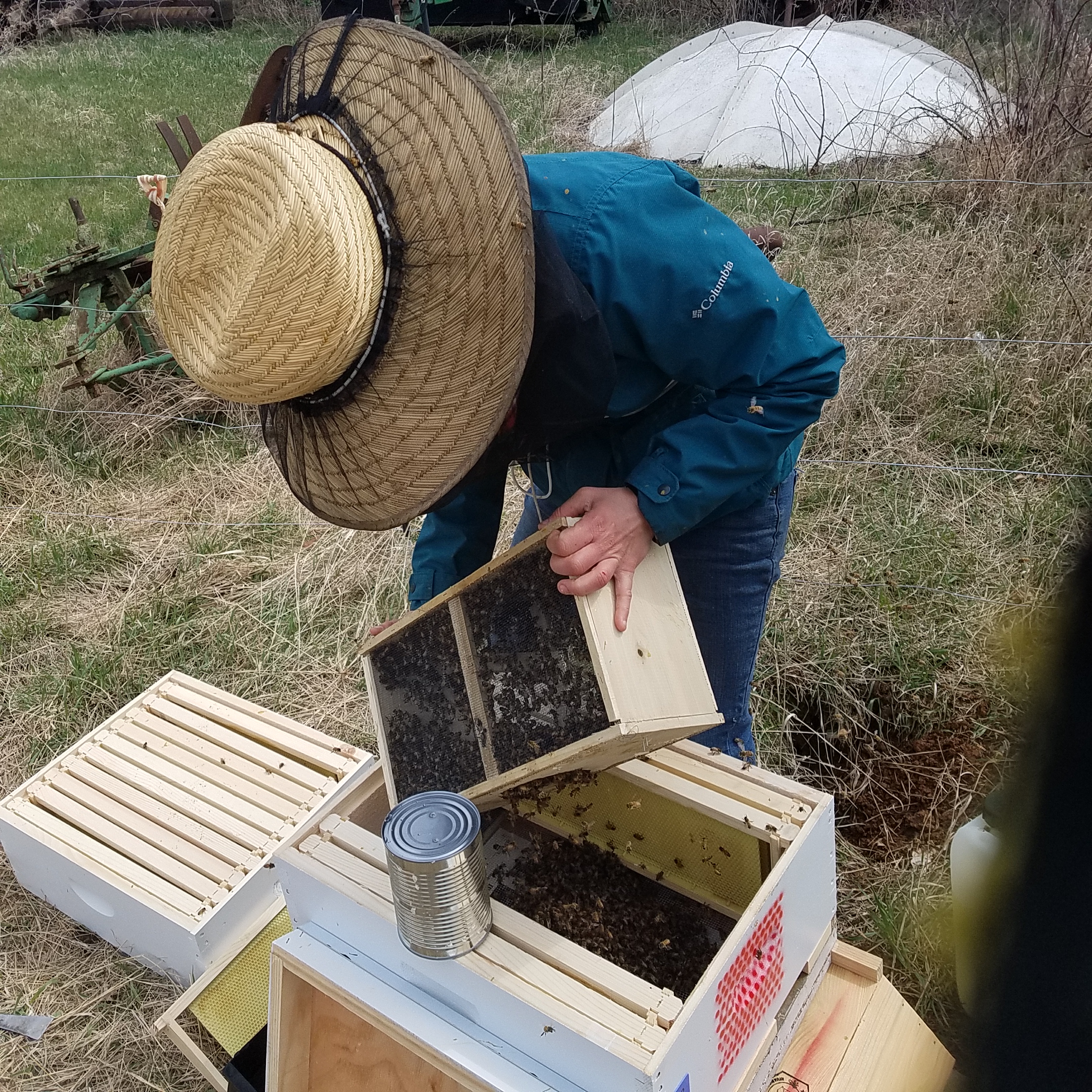
    To answer this question, we investigated the effects of using oxalic acid vapor treatments within one week of package installation in the spring in combination with natural swarming on the health of colonies. For the experiment, we established  27 3-lb packages in standard 10-frame Langstroth hives with screen bottom boards on April 7, 2017. Colonies were randomly assigned to one of two groups: treated with oxalic acid at a rate of 1 g per colony, one week after installation, or controls (untreated). 

    Figure 1. Oxalic acid application to honey bee packages (A) Honey bee package installation. (B) Oxalic acid treatment using the vaporization method. (C) Sticky boards used to quantify mite drops.

    During this experiment, efforts were not taken to prevent swarming. Natural swarming is another effective and safe approach to control mite populations, as the parent colony has a month-long break in brood production, which also causes a break in mite production. In addition, approximately 25% of the varroa mites leave with the issuing swarm. Colonies that swarmed were allowed to requeen themselves, resulting in a 3-week brood break for half of the colonies in the experiment. Mite levels were monitored throughout the duration of the study and bees were collected in May, July and September to quantify viruses.

    Our results indicate that treating packages using oxalic acid vapor provides a short-term reduction of Varroa mites in newly installed colonies, but found that, unless colonies swarm in the summer, there are no long-term benefits of the spring treatment in terms of mite levels and viruses (Figure 1). Thus, mite levels should be monitored and, if necessary, controlled throughout the season. Colony swarming did result in reduced mite and DWV levels in the fall. However, the break in the brood cycle resulted in a significant reduction in colony honey yield.

    Figure 2. Number of varroa mites drops in colonies in the control group and colonies that were treated with OA in the spring. OA only make a difference for varroa mite levels in colonies that swarmed in the summer

    We recommend implementing a brood break mid-season, either through swarming or the managerial equivalent (i.e., colony division), as a key tool for mite control for backyard beekeepers who do not rely on honey production as a main source of income. Colony division strategies could be easily integrated into a seasonal Integrated Pest Management (see this article: IPM) program and have the potential to serve as a non-chemical and cultural alternative to chemical miticides.

    This is a summary of Evans, K. C., Underwood, R. M., & López-Uribe, M. M. (2021). Combined effects of oxalic acid sublimation and brood breaks on Varroa mite (Varroa destructor) and deformed wing virus levels in newly established honey bee (Apis mellifera) colonies. Journal of Apicultural Research doi.org/10.1080/00218839.2021.1985260.


    Contributed post by

    Robyn Underwood, PhD, Assistant Research Professor of Entomology

    Margarita López-Uribe, PhD, Assistant Professor of Entomology

    The Pennsylvania State University

  • Honey bee viruses are common, but at low levels, in wild bees

    Honey bee viruses are common, but at low levels, in wild bees

    Pathogen transmission from honey bees to wild bees has been attributed as one of the major negative impacts that managed honey bees have on wild bee populations. Among the many pests and pathogens that attack honey bees, the varroa mite and its associated virus, deformed wing virus (DWV), are most abundant and detrimental to honey bee health. The synergistic interactions between this virus and varroa mites have increased the amount of DWV in honey bees and caused what is known as the DWV epidemic. 


    Because flowers are hubs of pathogen transmission among pollinators, the increased viral load of DWV in honey bees has likely facilitated its transmission to other bees and insects that share floral resources with honey bees. Indeed, several studies have reported the presence of DWV in various groups of insects including bumble bees, several groups of solitary bees, syrphid flies, ants, and cockroaches among others. However, studies investigating the transmission of DWV to other insects have focused on the detection (presence or absence) of the virus among pollinators, rather than the level of infection. While DWV infection has been demonstrated in bumble bees, infection in other bees and pollinators has not been shown. Thus, the question remains: are honey bee viruses abundant in wild bee populations? And if so, is the level of infection of honey bee viruses in wild bees related to how many honey bees are present?


    We investigated these questions through surveys of pollinator abundance and honey bee viruses—including DWV—in bee pollinators of pumpkin farms. For two years, we visited 18 pumpkin farms and collected honey bees, bumble bees, and squash bees to quantify the amount of DWV along with four other common honey bee viruses in these bees: 

    We found that DWV was the most common virus among the species sampled, with about 70% of the samples positive for DWV. Specifically, we found that 95% of the honey bees sampled had DWV, compared to 88% of bumble bees and 48% of squash bees. This corroborates with results from previous studies. However, when we quantified the relative levels of DWV in the three species, we found something unexpected! We found an average of 10 million copies of DWV in honey bees, compared to 48 viral copies in bumble bees and 4 viral copies in squash bees. Our results suggest DWV is widespread among these wild pollinators, but the virus does not present at the same level in wild bees as it does in honey bees. Due to the low number of DWV copies we detected in squash bees, we suspect that they are not good hosts for DWV, and that the virus is not infecting them. 

    So, what does this mean and how is this important to our understanding of interactions between honey bees and wild bees? First of all, this study provides empirical evidence that honey bee viruses are likely not having a large negative effect on wild bees. Indeed, experimental studies looking at the fitness costs of DWV infections in other bees have shown that DWV infects bumble bees but not solitary bees. Our results also seem to indicate that solitary bees are likely not severely impacted by the DWV epidemic that is attacking honey bees. This is particularly important given that wild bees often interact with feral honey bee colonies which have uncontrolled levels of varroa mites and experience extremely high DWV infection levels. While we found that wild bees may not be negatively impacted by these honey bee viruses, many wild bees are known to suffer from other pathogens and parasites. Our lab will continue to monitor pathogen and parasite burden in wild bee populations and look for farm management practices that may reduce these threats.


    To learn more about this study, check out our article:

    Jones, L.J., Ford, R.P., Schilder, R.J., López-Uribe, M.M., 2021. Honey bee viruses are highly prevalent but at low intensities in wild pollinators of cucurbit agroecosystems. Journal of Invertebrate Pathology. 185, 107667. 


    Contributed post by

    Margarita López-Uribe, PhD, Assistant Professor of Entomology

    Laura Jones, PhD Candidate in Ecology

    Pennsylvania State University

    Photo credit: Laura Jones
  • 2021 iRES Virtual Program – Student Projects Results

    2021 iRES Virtual Program – Student Projects Results


    With funding from the National Science Foundation (NSF), a group of biologists, engineers and climate scientists from Penn State (USA), University of Kansas (USA), Universidad Militar Nueva Granada (Colombia), and Pontificia Universidad Católica del Perú (Peru) launched a summer research program for undergraduate students to help shed light on how pollinators and pollination are responding to our changing world. In 2021, the program was offered virtually to 12 students from the USA, Colombia, and Peru. One of the unique characteristics of this program is that it brings together teams from biological sciences and engineering to find answers to these questions. Why is this an advantage? A major challenge for biologists to understand how pollinator populations are responding to changing climates is that we don’t have instruments that allow us to understand the behavior and physiology of small organisms that move very fast like bees.

    Our team of students and mentors in 2021 was set up to answer the following questions:

    1. How will increasing temperatures affect pollinator foraging?

    2. How do air pollutants affect floral scents and pollinator foraging behavior?

    3. How will heat stress on pollinator-dependent crops impact food supply in cities where the largest concentrations of human populations are found?


    To investigate question 1, Maren Appert and Abigail Jiménez from California (USA), Alonso Delgado from Texas (USA), and Andrés Herrera and Ruben Martín from Cajicá (Colombia) collected foraging data of pollinators along with the varying temperatures of the day and set up bioassays to quantify the critical thermal maxima (CTmax) of pollinators that were foraging during the coolest and hottest parts of the day. The hypothesis they had was that pollinators foraging during the hottest parts of the day would tolerate higher temperatures during the CTmax bioassay. Because these students were working from home, some of them had to set up experiments in their kitchens or get very creative to have the experimental set up working in their backyards. Some students even had their kids as their field assistants. In collecting the empirical data to test their hypothesis, they collected CTmax data from several types of pollinators (bees and flies), and from females and males. The preliminary results of their experiments have reached some interesting findings: (1) some bee species (like honey bees) have significantly higher CTmax than most other bees and flies; (2) males tend to have higher CTmax than female bees, and (3) bees that exhibit higher CTmax generally forage during hotter times of the day. To learn more about their projects and findings, please visit and watch this video.

    https://www.youtube.com/watch?v=C_ArmNt8RYw

    For question 2, students aimed to understand how air pollutants affect pollinator foraging patterns. This project had two parts. Part 1 focused on developing numerical models to understand how floral scents degrade with environmental pollutants. Part 2 focused on developing radars that could be used to study how changes in floral scents can impact pollinator foraging. In this project, Renata Proano and Tatiana Terranova from Pennsylvania (USA), and Luis Ocupa and Juan Tello from Lima (Peru) worked together. Renata, Luis, and Juan studied the rate of destruction of the most abundantly floral scents (linalool, limonene, β-myrcene, and geraniol) of Geranium Graveolens in urban and rural regions of Pennsylvania. Results from their project indicate that air pollutants modify the quantity and the quality of floral scents leading to floral scents not traveling the necessary distance needed for insect pollinators to locate flowers. However, to appropriately study how air pollutants change pollinator foraging patterns, it is necessary to develop devices that will allow us to characterize foraging behavior. To achieve this goal, Tatiana worked on analyzing radar data to characterize the foraging patterns of bees. Using the programming language python, she was able to develop a program to interpret radar data into realistic foraging flights of bees. To learn more about the projects developed for question 2, check out the two videos below.

    https://youtu.be/gMC2VgdXyoohttps://www.youtube.com/watch?v=bfxn5VATLAM

    Students Alonso Zevallos and Rocio Beneito from Florida (USA) and Yannet Quispes from Lima (Peru) worked on questions 3. Their project aimed to quantify the pollination footprint of populated regions throughout the United States under the scenario of future rising temperatures (i.e., heat stress/waves) to determine how these regions would be impacted by a shortage of pollination dependent crops. For this project, students chose cabbage, soybean, sweetpotato, squash, and cucumber as model crops, and regions of the United States associated with the consumption of these commodities under the probability of increased ambient temperature. Students used publicly available production data and existing pollination field studies and quantified pollinator-dependence of these model crops on insect-mediated pollination services in several U.S. regions. Overall, their results indicate that as temperature rises, the pollination footprint for both consumption and production decreases. In addition, their data suggests that as temperatures begin to rise, pollination footprint will drop, decreasing the supply of pollinator-dependent commodities as demand for these in many U.S. regions increase due to increasing population pressure. These findings imply that there is an urgency to take action to stop these rising temperatures.

    Despite the pandemic, our 2021 iRES virtual program facilitated the collaborative work of students and mentors from 9 institutions in 3 countries. All students’ projects generated novel scientific findings and benefited from the interdisciplinary interactions of scientists in different fields. Our results indicate that our changing world is impacting pollinators in multiple ways and that changes in pollinator foraging behavior, their ability to fly under high temperature and to respond to changes in the plants may significantly disrupt plant-pollinator interactions and our food systems. We are hoping the next 2 years of this project will continue to generate valuable data to understand how pollinators are responding to all of these ongoing environmental changes linked to human activities.


    Project funded by NSF 

    (OISE-1952470)

    and is administered by the López-Uribe Lab in the Department of Entomology at Penn State University.

    Contributed post by

    Margarita M. López-Uribe

    Assistant Professor in Pollinator Health

    Pennsylvania State University

  • A diamond in the pumpkin patch

    A diamond in the pumpkin patch

    I visit pumpkin farms across Pennsylvania to investigate host-pathogen dynamics in bee communities. In pumpkin fields, we typically see three bee species foraging – honey bees, wild bumble bees and wild squash bees. Haven’t heard of squash bees before? These are incredibly important, solitary bees that specialize on the pollen of pumpkin and squash. In fact, they are some of the best pollinators for pumpkin crops in Pennsylvania! Unlike social honey bees and bumble bees where only females bring food back to the hive, both male and female squash bees forage on flowers for nectar, and the females collect pollen for their offspring. Female and male squash bees also behave differently; the females spend much of their time collecting pollen to bring back to their nests, whereas the males frequent many flowers during the morning in search of females and occasionally nectar. Because of these sex-specific behaviors, identifying squash bees by sex is critical to understanding their independent roles in host-pathogen dynamics. However, last year I learned that this isn’t always as simple as it seems.


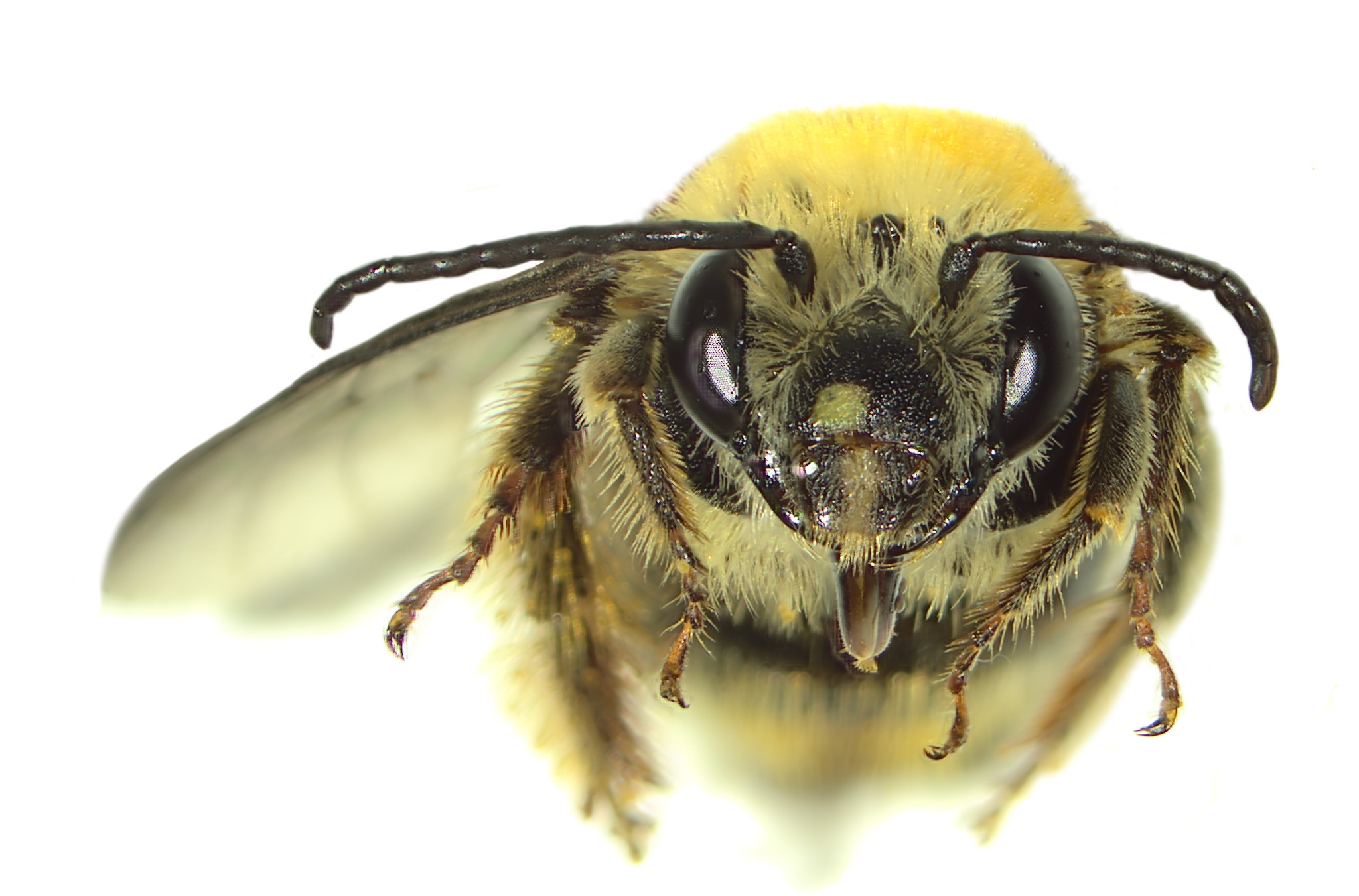
    Squash bees live by the motto, “the early bee gets the nectar,” often starting their day well before sunrise. In order to study them, we have to live by a similar motto, “the early researcher gets the bee.” On one particular day, my labmate Ginamaría Roman-Echevarría and I drove to Butler, PA, starting our journey as usual, at about 3:00AM. In fact, everything about the start to our day was as it usually was: we drank too much coffee, sang along to our field work playlist, and then collected bees in the all-too-cold morning weather. When collecting squash bees, we try to confirm their sex from a few key characters. The males have long antennae and a yellow spot on their face. The females have bushy hind legs covered in long setae that they use to transport pollen back to their nests. When in the flower, we identify these busy mothers the fastest since their legs look enlarged and bright yellow from the pollen they’ve collected. I remember finding one such female, though strangely, only one leg looked full of pollen. I noticed she was indeed collecting pollen, even if only successfully on one leg, so I scooped her up and labeled her as female. When we were satisfied with the day’s haul we drove back to the lab. The hard part was over, or so we thought.


    At the lab, I first confirm our field identifications before determining pathogen loads. When going through the bees to confirm their identifications this particular day, I noticed something strange. One female-labeled bee, the inefficient pollen-collector, had a long antennae. Then I noticed, she had a yellow spot on one side of her face. Lastly, I realized I had unfairly judged her pollen-packing abilities in the field – her left leg didn’t have the long setae it needed to hold pollen! What I was looking at, ladies and gentleman, was a half-lady, half-gentleman. Her head was split as left-female, right-male, yet her body was split right-female, left-male. We had found a mosaic gynandromorph, where male and female characters are patchily distributed throughout the body. These bees are very rare to find in the field and the mechanisms that lead to their development are not well known. In other organisms, gynanders can develop due to external stressors such as pollution, or even parasitism! We may never know what caused this particular bee to develop into a gynandromorph. However, we hope that with more documentation of these individuals in wild systems, we may be able to capture the frequency of their occurrence, and potentially identify what stressors may result in their development.


    To learn more about this particular specimen or the potential developmental and environmental mechanisms of gynandromorphism in insects, check out our article in the Journal of Melittology.


    Photo credit: Laura Jones and Shelby Kilpatrick

    Contributed post by

    Laura Jones, PhD Candidate

    Intercollege Graduate Degree Program in Ecology

    Pennsylvania State University