Category: Blogs

  • Oxalic acid applications to honey bee packages: Do they help reduce mites and viruses?

    Oxalic acid applications to honey bee packages: Do they help reduce mites and viruses?

    Varroa mites are, without a doubt, one of the most difficult challenges for beekeeping management. Treating for mites is tricky: if you don’t treat for mites the probability of colony survival decreases by ≥55%, but if you overtreat mites may evolve resistance to treatments or there can be negative side effects for the bees. Thus, our general recommendation for beekeepers is to treat mites only when colonies are above threshold while using the least toxic, but effective, miticide treatments. Organic acids (formic and oxalic acid) are among the best and safest tools that beekeepers have available to control mites. In particular, oxalic acid is one of the most commonly used miticide treatments before installing packages in the spring (see detailed protocols here). Packages often come with a high number of mites, so many beekeepers choose to treat packages with oxalic acid. The question is: does it really make a difference for colony health to treat colonies with miticides in early spring? 

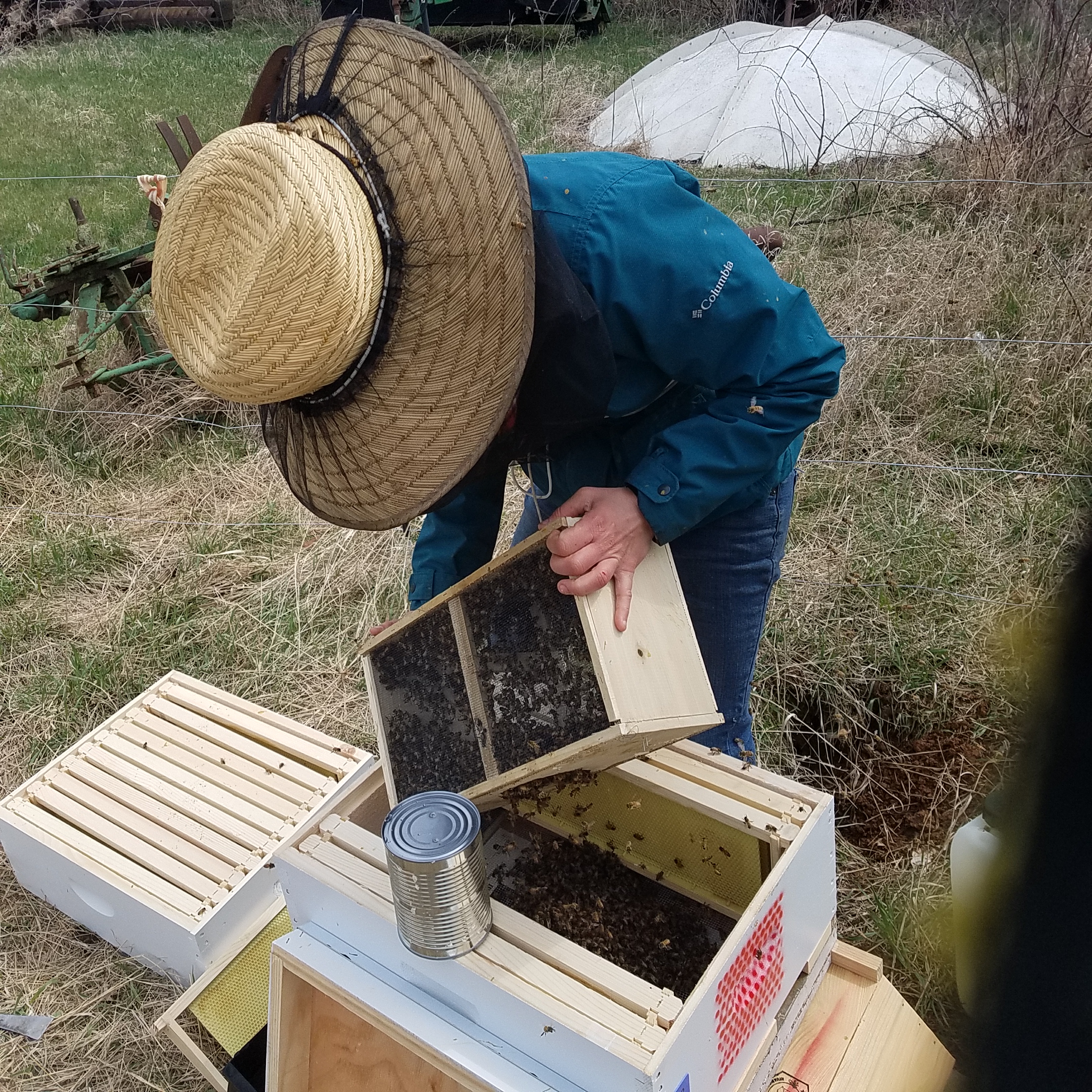
    To answer this question, we investigated the effects of using oxalic acid vapor treatments within one week of package installation in the spring in combination with natural swarming on the health of colonies. For the experiment, we established  27 3-lb packages in standard 10-frame Langstroth hives with screen bottom boards on April 7, 2017. Colonies were randomly assigned to one of two groups: treated with oxalic acid at a rate of 1 g per colony, one week after installation, or controls (untreated). 

    Figure 1. Oxalic acid application to honey bee packages (A) Honey bee package installation. (B) Oxalic acid treatment using the vaporization method. (C) Sticky boards used to quantify mite drops.

    During this experiment, efforts were not taken to prevent swarming. Natural swarming is another effective and safe approach to control mite populations, as the parent colony has a month-long break in brood production, which also causes a break in mite production. In addition, approximately 25% of the varroa mites leave with the issuing swarm. Colonies that swarmed were allowed to requeen themselves, resulting in a 3-week brood break for half of the colonies in the experiment. Mite levels were monitored throughout the duration of the study and bees were collected in May, July and September to quantify viruses.

    Our results indicate that treating packages using oxalic acid vapor provides a short-term reduction of Varroa mites in newly installed colonies, but found that, unless colonies swarm in the summer, there are no long-term benefits of the spring treatment in terms of mite levels and viruses (Figure 1). Thus, mite levels should be monitored and, if necessary, controlled throughout the season. Colony swarming did result in reduced mite and DWV levels in the fall. However, the break in the brood cycle resulted in a significant reduction in colony honey yield.

    Figure 2. Number of varroa mites drops in colonies in the control group and colonies that were treated with OA in the spring. OA only make a difference for varroa mite levels in colonies that swarmed in the summer

    We recommend implementing a brood break mid-season, either through swarming or the managerial equivalent (i.e., colony division), as a key tool for mite control for backyard beekeepers who do not rely on honey production as a main source of income. Colony division strategies could be easily integrated into a seasonal Integrated Pest Management (see this article: IPM) program and have the potential to serve as a non-chemical and cultural alternative to chemical miticides.

    This is a summary of Evans, K. C., Underwood, R. M., & López-Uribe, M. M. (2021). Combined effects of oxalic acid sublimation and brood breaks on Varroa mite (Varroa destructor) and deformed wing virus levels in newly established honey bee (Apis mellifera) colonies. Journal of Apicultural Research doi.org/10.1080/00218839.2021.1985260.


    Contributed post by

    Robyn Underwood, PhD, Assistant Research Professor of Entomology

    Margarita López-Uribe, PhD, Assistant Professor of Entomology

    The Pennsylvania State University

  • Honey bee viruses are common, but at low levels, in wild bees

    Honey bee viruses are common, but at low levels, in wild bees

    Pathogen transmission from honey bees to wild bees has been attributed as one of the major negative impacts that managed honey bees have on wild bee populations. Among the many pests and pathogens that attack honey bees, the varroa mite and its associated virus, deformed wing virus (DWV), are most abundant and detrimental to honey bee health. The synergistic interactions between this virus and varroa mites have increased the amount of DWV in honey bees and caused what is known as the DWV epidemic. 


    Because flowers are hubs of pathogen transmission among pollinators, the increased viral load of DWV in honey bees has likely facilitated its transmission to other bees and insects that share floral resources with honey bees. Indeed, several studies have reported the presence of DWV in various groups of insects including bumble bees, several groups of solitary bees, syrphid flies, ants, and cockroaches among others. However, studies investigating the transmission of DWV to other insects have focused on the detection (presence or absence) of the virus among pollinators, rather than the level of infection. While DWV infection has been demonstrated in bumble bees, infection in other bees and pollinators has not been shown. Thus, the question remains: are honey bee viruses abundant in wild bee populations? And if so, is the level of infection of honey bee viruses in wild bees related to how many honey bees are present?


    We investigated these questions through surveys of pollinator abundance and honey bee viruses—including DWV—in bee pollinators of pumpkin farms. For two years, we visited 18 pumpkin farms and collected honey bees, bumble bees, and squash bees to quantify the amount of DWV along with four other common honey bee viruses in these bees: 

    We found that DWV was the most common virus among the species sampled, with about 70% of the samples positive for DWV. Specifically, we found that 95% of the honey bees sampled had DWV, compared to 88% of bumble bees and 48% of squash bees. This corroborates with results from previous studies. However, when we quantified the relative levels of DWV in the three species, we found something unexpected! We found an average of 10 million copies of DWV in honey bees, compared to 48 viral copies in bumble bees and 4 viral copies in squash bees. Our results suggest DWV is widespread among these wild pollinators, but the virus does not present at the same level in wild bees as it does in honey bees. Due to the low number of DWV copies we detected in squash bees, we suspect that they are not good hosts for DWV, and that the virus is not infecting them. 

    So, what does this mean and how is this important to our understanding of interactions between honey bees and wild bees? First of all, this study provides empirical evidence that honey bee viruses are likely not having a large negative effect on wild bees. Indeed, experimental studies looking at the fitness costs of DWV infections in other bees have shown that DWV infects bumble bees but not solitary bees. Our results also seem to indicate that solitary bees are likely not severely impacted by the DWV epidemic that is attacking honey bees. This is particularly important given that wild bees often interact with feral honey bee colonies which have uncontrolled levels of varroa mites and experience extremely high DWV infection levels. While we found that wild bees may not be negatively impacted by these honey bee viruses, many wild bees are known to suffer from other pathogens and parasites. Our lab will continue to monitor pathogen and parasite burden in wild bee populations and look for farm management practices that may reduce these threats.


    To learn more about this study, check out our article:

    Jones, L.J., Ford, R.P., Schilder, R.J., López-Uribe, M.M., 2021. Honey bee viruses are highly prevalent but at low intensities in wild pollinators of cucurbit agroecosystems. Journal of Invertebrate Pathology. 185, 107667. 


    Contributed post by

    Margarita López-Uribe, PhD, Assistant Professor of Entomology

    Laura Jones, PhD Candidate in Ecology

    Pennsylvania State University

    Photo credit: Laura Jones
  • A diamond in the pumpkin patch

    A diamond in the pumpkin patch

    I visit pumpkin farms across Pennsylvania to investigate host-pathogen dynamics in bee communities. In pumpkin fields, we typically see three bee species foraging – honey bees, wild bumble bees and wild squash bees. Haven’t heard of squash bees before? These are incredibly important, solitary bees that specialize on the pollen of pumpkin and squash. In fact, they are some of the best pollinators for pumpkin crops in Pennsylvania! Unlike social honey bees and bumble bees where only females bring food back to the hive, both male and female squash bees forage on flowers for nectar, and the females collect pollen for their offspring. Female and male squash bees also behave differently; the females spend much of their time collecting pollen to bring back to their nests, whereas the males frequent many flowers during the morning in search of females and occasionally nectar. Because of these sex-specific behaviors, identifying squash bees by sex is critical to understanding their independent roles in host-pathogen dynamics. However, last year I learned that this isn’t always as simple as it seems.


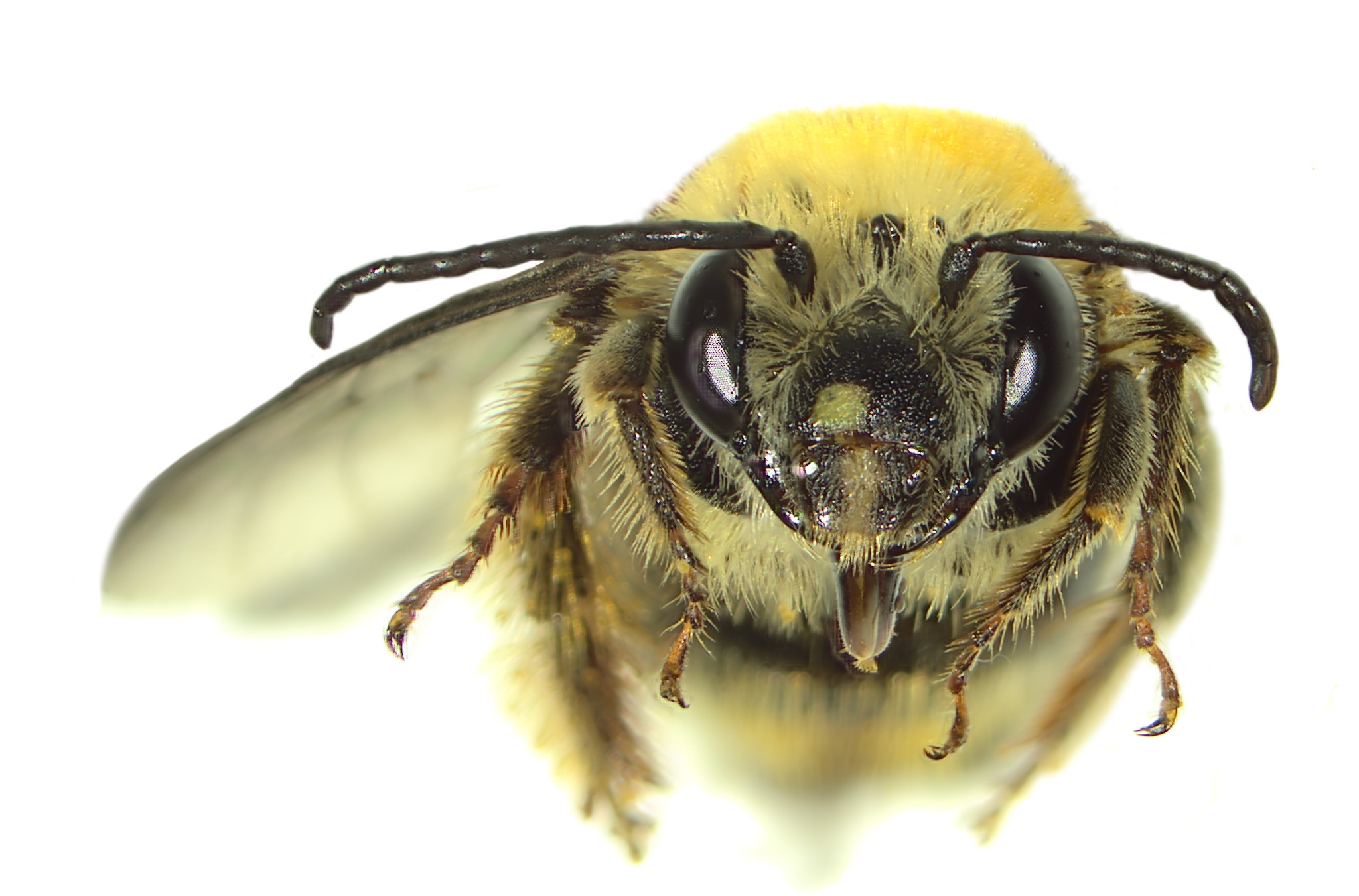
    Squash bees live by the motto, “the early bee gets the nectar,” often starting their day well before sunrise. In order to study them, we have to live by a similar motto, “the early researcher gets the bee.” On one particular day, my labmate Ginamaría Roman-Echevarría and I drove to Butler, PA, starting our journey as usual, at about 3:00AM. In fact, everything about the start to our day was as it usually was: we drank too much coffee, sang along to our field work playlist, and then collected bees in the all-too-cold morning weather. When collecting squash bees, we try to confirm their sex from a few key characters. The males have long antennae and a yellow spot on their face. The females have bushy hind legs covered in long setae that they use to transport pollen back to their nests. When in the flower, we identify these busy mothers the fastest since their legs look enlarged and bright yellow from the pollen they’ve collected. I remember finding one such female, though strangely, only one leg looked full of pollen. I noticed she was indeed collecting pollen, even if only successfully on one leg, so I scooped her up and labeled her as female. When we were satisfied with the day’s haul we drove back to the lab. The hard part was over, or so we thought.


    At the lab, I first confirm our field identifications before determining pathogen loads. When going through the bees to confirm their identifications this particular day, I noticed something strange. One female-labeled bee, the inefficient pollen-collector, had a long antennae. Then I noticed, she had a yellow spot on one side of her face. Lastly, I realized I had unfairly judged her pollen-packing abilities in the field – her left leg didn’t have the long setae it needed to hold pollen! What I was looking at, ladies and gentleman, was a half-lady, half-gentleman. Her head was split as left-female, right-male, yet her body was split right-female, left-male. We had found a mosaic gynandromorph, where male and female characters are patchily distributed throughout the body. These bees are very rare to find in the field and the mechanisms that lead to their development are not well known. In other organisms, gynanders can develop due to external stressors such as pollution, or even parasitism! We may never know what caused this particular bee to develop into a gynandromorph. However, we hope that with more documentation of these individuals in wild systems, we may be able to capture the frequency of their occurrence, and potentially identify what stressors may result in their development.


    To learn more about this particular specimen or the potential developmental and environmental mechanisms of gynandromorphism in insects, check out our article in the Journal of Melittology.


    Photo credit: Laura Jones and Shelby Kilpatrick

    Contributed post by

    Laura Jones, PhD Candidate

    Intercollege Graduate Degree Program in Ecology

    Pennsylvania State University

  • How viruses, immunity, and overwintering survival of feral honey bees compare to managed colonies

    How viruses, immunity, and overwintering survival of feral honey bees compare to managed colonies

    Honey bee colonies have been in decline in recent years due to many factors, including lack of high-quality nutrition, exposure to pesticides, and pressure from pests and pathogens. Infestations of the parasitic mite Varroa destructor play a large role in these staggering colony losses. These mites feed on the fat body and hemolymph of bees, and in the process, they transmit a cocktail of viruses that weakens the individuals and eventually the whole colony. For this reason, controlling mite populations through the application of miticides can be crucial for beekeepers to prevent colony losses. This becomes clear when beekeepers refrain from treating commercially managed bees, as they rarely survive more than one year. However, this beekeeper-led management of mites comes at a cost: the bees may not be able to develop natural mechanisms of resistance or tolerance to this pest and associated viruses.

    There are exceptions to this phenomenon, which have been observed in unmanaged (feral) colonies that can survive in the absence of beekeeper management in wild conditions. Reports from around the world have described feral colonies naturally evolving mechanisms of tolerance or resistance to mites and viruses as a result of the evolutionary arms race between bees and these pathogens. For several years, we have been studying the role of honey bee immunity and viruses on the survival of feral colonies that live in wild conditions without assistance from beekeepers.

    Studying feral bees is difficult because they can be hard to locate in nature. Due to these challenges, we teamed up with a large number of beekeepers across Pennsylvania (USA) to locate feral colonies, characterize their overwintering survival, and quantify the levels of viruses that these unmanaged colonies have. In addition, we also quantified the expression of immune genes that individuals in these colonies produce to investigate whether unmanaged colonies are defending themselves better against viruses transmitted by mites.

    We collected samples from 25 feral colonies and 25 managed colonies across Pennsylvania (USA) and then performed laboratory analyses on bees collected in the spring and fall over two years. We found that feral colonies have higher average levels of one mite-transmitted virus (DWV) compared to managed colonies, but this varied over time. Higher pathogen levels were linked to increased immune gene expression, and feral colonies showed higher expression of five out of the six immune genes we examined. Interestingly, feral and managed colonies had similar levels of overwintering survival even though feral colonies received no external inputs (e.g., mite control, winter feeding). Additionally, we found that the expression of two immune genes increased the odds of overwintering survival in feral and managed colonies.

    While miticides are still crucial tools for beekeepers to help mitigate the destructive effects of Varroa mites and viruses such as DWV, feral colonies may offer sources of resilience to pests and pathogens and deserve further investigation. The identification of immune genes associated with colony survival also holds promise for these genes to be used as predictors of honey bee health, which can aid in screening colonies for their ability to overwinter when dealing with diseases. Overall, we hope that future work focuses on incorporating these advantageous traits from locally adapted feral bees into managed honey bee breeding programs.

    For more details about this study, check out our paper in Frontiers in Ecology and Evolution.

    Photo Credit: Kathleen Ciola Evans

    Contributed post by

    Chauncy Hinshaw, Ph.D. candidate

    Department of Plant Pathology and Environmental Microbiology

    Penn State University

  • Coronavirus Food Assistance Program (CFAP2)

    Coronavirus Food Assistance Program (CFAP2)

    The year 2020 has been difficult for multiple reasons. With businesses shut down, then opening with limited capacity, the pocketbooks of beekeepers have been lighter than hoped.  A recent announcement should bring some aid to those who need it. If you are a honey producer who makes less than $900,000 per year, you could get up to 10.6% of your total 2019 honey sales in financial aid through the Coronavirus Food Assistance Program (CFAP2).


    Beekeepers who sell honey can apply for financial assistance to help absorb costs associated with the COVID-19 pandemic.

    The CFAP2 program allows beekeepers to apply for financial assistance associated with increased costs of production in 2020. Payments to honey producers are based on honey sales from 2019. You can calculate how much you can get using the table below.

    For example, if your 2019 sales were $15,000, you can get up to $1,590.  

    $15,000*0.106= $1,590.  

    If your 2019 sales were $75,000 , you can get up to $7,775.

    ($49,999*0.106)+($25,001*0.099)= $7,775.

    You need to act now!  Apply before December 11, 2020 by visiting:

    https://www.farmers.gov/cfap


    Post contributed by 

    Robyn Underwood, PhD, Assistant Research Professor